

Make better decisions about commercial printing.
Practical guidance on buying print, choosing materials, understanding production, and running a print business—from the specification to the finished job.
Start with the job
Commercial printing decisions become clearer when the job is defined: quantity, finished size, stock, color requirements, finish, use, deadline, delivery point, and acceptable risk. Kit Yarrow helps print buyers, procurement teams, designers, business owners, ecommerce operators, and print-shop managers understand how those specifications shape cost, quality, turnaround, and the finished piece.
A useful answer does not begin with a product name or a press brochure. It begins with what the piece must do and what failure would cost. I would compare the full job specification before comparing the price, because two quotes can look alike while describing different paper, proofing, finishing, packing, freight, or turnaround. A cheap quote for a different job is mostly decorative arithmetic.
Look beyond the press
Start with Print Buying & Procurement when you are specifying a job, comparing quotes, choosing proofing, or qualifying a vendor. Move to Print Technology & Production for process choices; Materials & Finishing for physical behavior; and Prepress, Color & Quality when files, measurement, tolerances, or defects are central. Print Applications connects those choices to packaging, direct mail, displays, fulfillment, and other business uses.
When the decision involves capacity or economics, look beyond the press. Print Business & Operations examines estimating, scheduling, automation, outsourcing, waste, and bottlenecks; Industry & Equipment interprets capabilities and trends; Reviews & Comparisons evaluates options for a defined job. Browse print guides for the newest practical analysis, or visit About Kit Yarrow for the publication’s perspective. The press may be fast. The finishing queue remains unimpressed.
Latest print guides

Paper Weight Explained: GSM vs Pounds Without the Usual Confusion
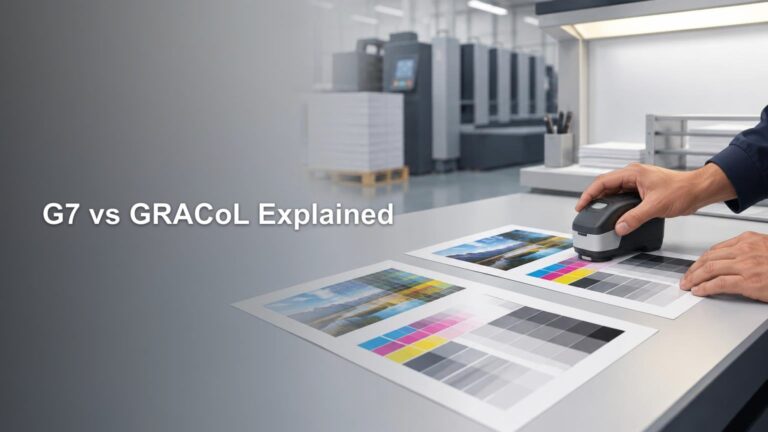
G7 vs GRACoL: What Print Buyers Actually Need to Know
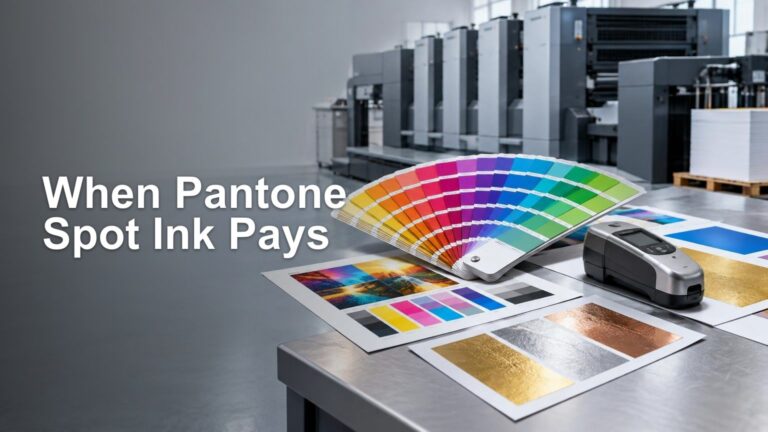
Pantone vs CMYK Printing: When a Spot Color Is Worth Paying For
Print Estimating Software: What It Has to Know Before the Quote Means Anything
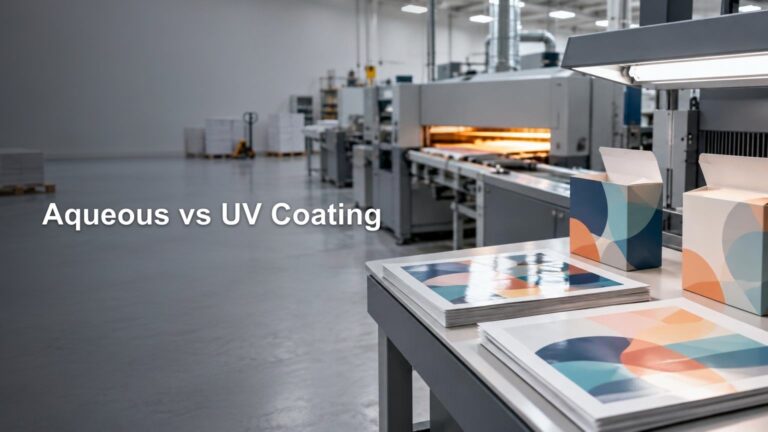
Aqueous Coating vs UV Coating: What Changes Beyond Gloss

A Practical Print Quality Checklist for Approving a Production Job
Understand the production consequence
The production method matters, but only through consequences the job can reveal. Color targets may change with the substrate; tight borders make registration and trimming variation obvious; heavy ink or toner across a fold can increase cracking risk. Coating may add rub resistance, while lamination changes the entire construction, including feel, glare, flexibility, and downstream handling. Proofing should match the risk: a screen proof can answer different questions from a physical or press proof.
When quality matters, define what approval means before production begins. Separate file correctness from color expectation, press registration from cut registration, and equipment capability from repeatable output. The right question is rarely whether a process is premium. Ask which variable controls the result, what tolerance is realistic, and whether the added step prevents a problem the application is actually likely to encounter.